COMMON PROBLEMS IN INDUSTRIAL ELECTRICAL SYSTEMS AND HOW TO PREVENT THEM
The Importance of Industrial Electrical Systems in Factories
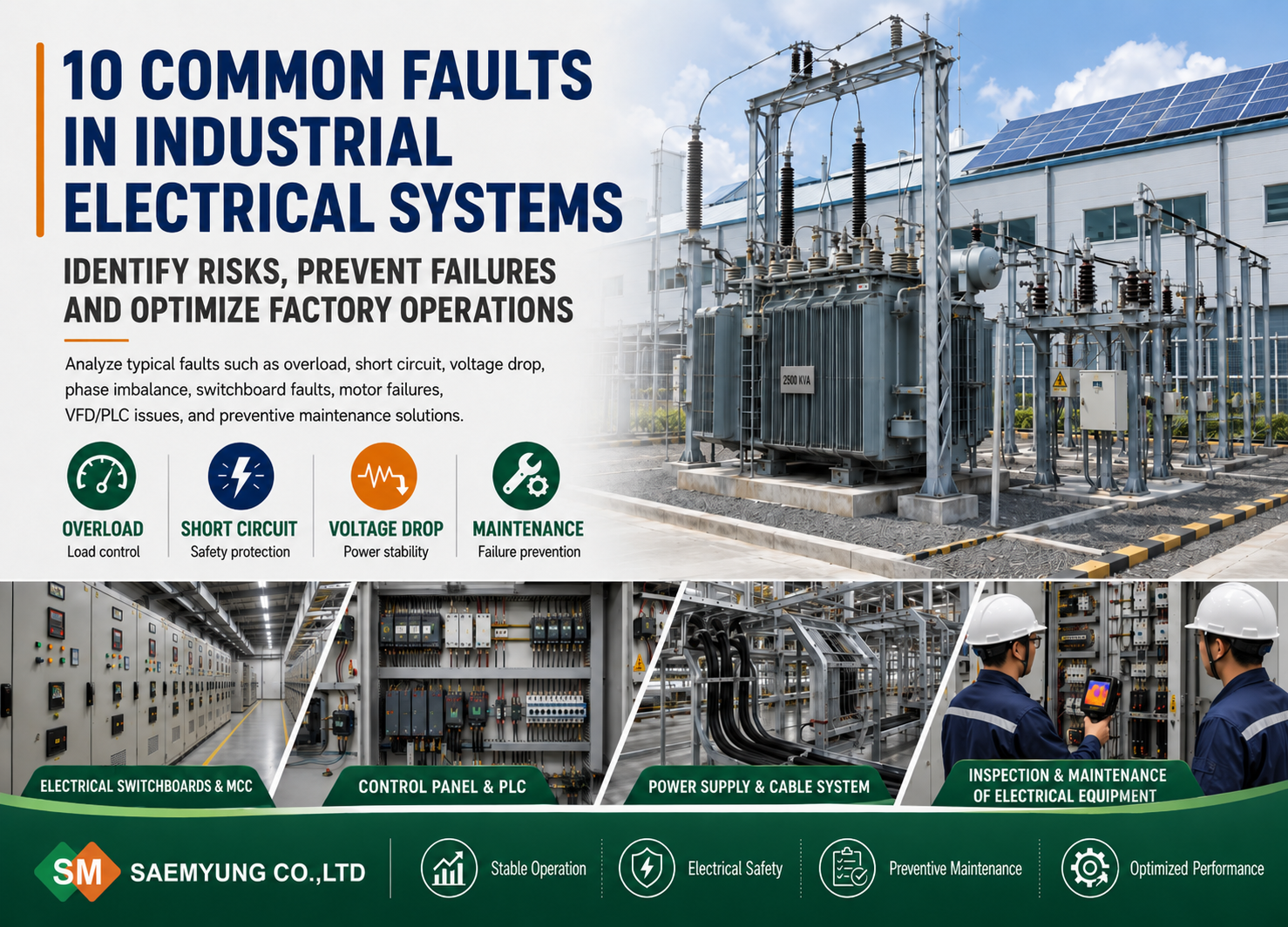
Industrial electrical systems are the backbone of every factory, manufacturing plant, and industrial facility. Production lines, machinery, lighting systems, HVAC systems, compressed air systems, and automation equipment all rely on a stable and reliable power supply.
However, during operation, many businesses experience electrical issues that disrupt production, reduce productivity, affect product quality, and lead to costly repairs. In severe cases, electrical failures can even result in fires, explosions, and workplace accidents.
Understanding the most common problems in industrial electrical systems helps businesses proactively prevent failures, improve safety, and extend equipment lifespan.
1. Electrical System Overload
This is one of the most common issues in industrial facilities.
Causes
- Actual power consumption exceeds the original design capacity.
- Production lines are expanded without upgrading the electrical system.
- Improper selection of cables or protective devices.
- Multiple high-power equipment operating simultaneously during peak periods.
Warning Signs
- Excessive heating of cables.
- Frequent circuit breaker trips.
- Unstable voltage.
- Overheating inside electrical panels.
Consequences
- Reduced equipment lifespan.
- Increased fire risk.
- Production interruptions.
Solutions
- Periodically review and recalculate electrical loads.
- Upgrade cables and protection devices when necessary.
- Distribute electrical loads properly among circuits.
2. Short Circuits and Electrical Faults
Short circuits are among the most dangerous electrical failures and can cause severe damage.
Causes
- Damaged cable insulation.
- Improper wiring connections.
- Aging electrical equipment.
- Moisture causing leakage currents.
Warning Signs
- Electrical sparks.
- Burning smells from electrical panels.
- Sudden circuit breaker tripping.
- Unexpected power outages.
Consequences
- Equipment damage.
- Electrical panel fires.
- Increased risk of factory fires.
Solutions
- Conduct regular insulation testing.
- Replace deteriorated cables.
- Use high-quality protective devices.
3. Voltage Drop and Power Fluctuation
Unstable voltage is a common cause of inefficient equipment performance.
Causes
- Long cable transmission distances.
- Inadequate cable sizing.
- Sudden increases in load demand.
- Unstable utility power supply.
Consequences
- Reduced motor efficiency.
- PLC and control system malfunctions.
- Increased energy consumption.
- Shortened equipment lifespan.
Solutions
- Recalculate and optimize cable sizes.
- Install voltage stabilizers when necessary.
- Balance loads across the electrical network.
4. Phase Imbalance
In three-phase electrical systems, phase imbalance is a common yet often overlooked problem.
Causes
- Uneven load distribution.
- Overloaded or faulty phase.
- Incorrect electrical connections.
Warning Signs
- Excessive motor vibration.
- Increased motor temperature.
- Reduced operating efficiency.
Consequences
- Motor burnout.
- Higher electricity costs.
- Reduced equipment lifespan.
Solutions
- Periodically measure voltage and current on all phases.
- Distribute loads evenly across phases.
- Install power monitoring systems.
5. Inadequate Grounding System
Grounding is one of the most critical elements of industrial electrical safety.
Causes
- Ground resistance exceeding acceptable limits.
- Corrosion of grounding conductors or electrodes.
- Improper installation practices.
Consequences
- Increased risk of electric shock.
- Damage to sensitive electronic equipment.
- Reduced effectiveness of lightning protection systems.
Solutions
- Regularly measure grounding resistance.
- Inspect grounding rods and conductors.
- Upgrade grounding systems when necessary.
6. Electrical Panel Failures
Electrical panels serve as the control center of the entire electrical system.
Common Problems
- Excessive heat buildup inside panels.
- Loose cable terminations and connections.
- Damaged circuit breakers and switching devices.
- Dust accumulation inside the panel.
Consequences
- Localized power outages.
- Production downtime.
- Increased fire hazards.
Solutions
- Perform routine cleaning and maintenance.
- Conduct thermal inspections using infrared cameras.
- Tighten all electrical connections periodically.
7. Electric Motor Failures
Electric motors are among the most widely used equipment in industrial facilities.
Causes
- Continuous overloading.
- Phase loss.
- Lack of maintenance.
- Worn bearings.
Warning Signs
- Abnormally high operating temperatures.
- Excessive noise.
- Strong vibration.
- Increased power consumption.
Solutions
- Implement regular maintenance schedules.
- Monitor vibration levels.
- Measure motor operating current routinely.
8. Variable Frequency Drive (VFD) and Control System Failures
Modern factories rely heavily on VFDs and PLC-based control systems.
Causes
- High ambient temperatures.
- Dust contamination.
- Unstable power supply.
- Programming errors.
Consequences
- Production line shutdowns.
- Process control inaccuracies.
- Production losses.
Solutions
- Install proper cooling and ventilation systems.
- Perform regular inspections and cleaning.
- Maintain backups of PLC programs and configurations.
9. Ineffective Lightning Protection Systems
Many businesses install lightning protection systems but neglect periodic inspections.
Consequences
- Damage to electrical and electronic equipment.
- Production interruptions.
- Loss of valuable operational data.
Solutions
- Inspect lightning protection systems annually.
- Measure grounding resistance regularly.
- Replace surge protection devices (SPDs) when required.
10. Lack of Preventive Maintenance
This is one of the leading causes of electrical failures in factories.
Common Issues
- Aging electrical cables.
- Oxidized connections.
- Deteriorated protection devices.
- Increased operating temperatures.
Consequences
- Higher repair costs.
- Longer equipment downtime.
- Reduced system lifespan.
Solutions
- Establish a preventive maintenance program.
- Conduct comprehensive electrical inspections.
- Implement condition-based maintenance strategies.
How to Minimize Industrial Electrical Failures
To reduce the occurrence of electrical problems, businesses should:
✔ Design electrical systems according to recognized standards.
✔ Use high-quality and certified electrical equipment.
✔ Perform regular inspections using professional testing equipment.
✔ Provide electrical safety training for employees.
✔ Establish proper operating and maintenance procedures.
✔ Partner with experienced industrial electrical contractors.
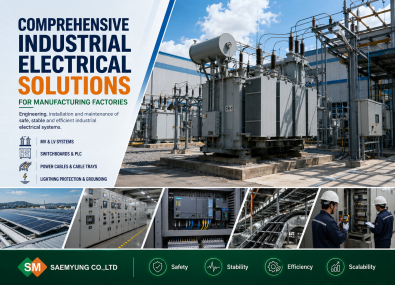
Safe Industrial Electrical Solutions from SAE MYUNG
SAE MYUNG provides consulting, design, installation, and maintenance services for industrial electrical systems in factories and industrial parks throughout Vietnam.
With a team of experienced engineers and a professional management process, we help businesses identify potential risks, optimize operational performance, and ensure that electrical systems remain safe, reliable, and efficient.
If your company is experiencing electrical system issues or requires professional maintenance services, SAE MYUNG is ready to provide effective and sustainable solutions tailored to your needs.