Mục lục
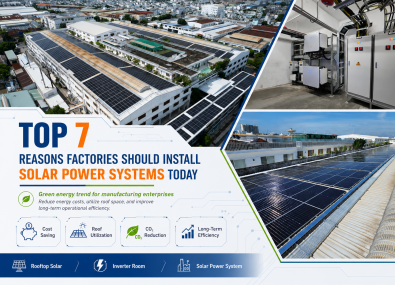
As electricity prices continue to rise, production costs fluctuate, and sustainability requirements become increasingly important, solar energy has emerged as one of the most attractive energy solutions for businesses.
In addition to reducing operating expenses, solar power enhances corporate image, supports ESG goals, and strengthens competitiveness in the market. However, before making an investment decision, most businesses are concerned about one key question:
How long does it take to recover the investment in a solar power system?
This is a reasonable concern because the payback period is one of the most important indicators for evaluating the financial effectiveness and long-term profitability of a solar project.
The payback period is the amount of time required for the savings generated by a solar power system to equal the initial investment cost.
In other words, it is the point at which a business has fully recovered its investment. After this period, most of the electricity generated by the system translates directly into financial savings.
For many factories and manufacturing facilities, solar energy is not only a cost-saving solution but also a long-term investment that creates sustainable value over many years.
The payback period of a solar power system varies from one business to another. Several factors influence the return on investment.
The initial investment cost has a direct impact on the payback period.
The total investment depends on:
An optimized investment strategy can help businesses shorten the payback period and maximize system performance.
Businesses with high daytime electricity consumption generally achieve better investment returns.
Solar power systems generate the most electricity during daylight hours, which often coincide with factory operating hours.
When a significant portion of the generated solar energy is consumed directly on-site, businesses can substantially reduce the amount of electricity purchased from the utility grid.
Industries such as electronics, mechanical manufacturing, food processing, textiles, logistics, warehousing, and packaging often benefit greatly from solar energy systems.
Electricity prices are one of the key factors influencing the financial performance of a solar project.
As electricity prices increase, the economic value generated by solar power also increases. This allows businesses to save more money and achieve a faster return on investment.
In an environment where energy demand continues to grow and electricity costs are expected to rise, solar energy provides businesses with greater control over operating expenses.
The amount of electricity generated by a solar system depends largely on the level of solar irradiation available at the installation site.
Vietnam is one of the countries with strong solar energy potential due to its favorable sunlight conditions throughout many regions.
Areas with higher solar irradiation enable systems to generate more electricity, thereby improving project profitability and reducing the payback period.
The quality of system components directly affects efficiency and lifespan.
A solar power system built with high-quality equipment offers:
On the other hand, low-quality equipment may result in reduced energy output and increased maintenance expenses over time.
In addition to equipment quality, professional design and installation play a crucial role in system performance.
A properly designed and installed solar power system can:
This is why businesses should work with experienced contractors specializing in industrial electrical systems and solar energy solutions.
In practice, the payback period of a solar power system depends on factors such as investment scale, electricity consumption, solar irradiation conditions, equipment quality, and electricity prices.
For manufacturing businesses with significant daytime electricity consumption, the average payback period typically ranges from 3 to 6 years.
After this period, most of the electricity generated by the system translates directly into cost savings for the business.
Considering that solar power systems generally have a lifespan of 25 to 30 years, solar energy is widely regarded as one of the most effective long-term investments available today.
This is where the greatest value of solar energy becomes evident.
Once the investment has been recovered, businesses continue to benefit from the clean electricity generated by the system for many years.
Key benefits include:
Solar power is therefore not merely a cost-saving measure but a long-term profit-generating investment.
For manufacturing businesses, electricity is often one of the largest operating expenses.
By investing in solar energy, companies can:
In today's highly competitive business environment, controlling energy costs is a major advantage.
Using renewable energy demonstrates a company's commitment to environmental responsibility and sustainability.
This helps strengthen brand reputation and build trust with customers and partners.
Many multinational corporations now require suppliers and business partners to reduce carbon emissions and adopt renewable energy solutions.
Solar energy is one of the most effective ways to meet ESG requirements and sustainability targets.
Solar power helps reduce CO₂ emissions and supports the transition toward environmentally friendly and sustainable manufacturing practices.
This trend is becoming increasingly important across industries worldwide.
For businesses that own factories, warehouses, or facilities with significant daytime electricity consumption, solar energy is a highly attractive investment option.
Early adoption not only helps reduce energy expenses but also strengthens the company's ability to meet environmental standards, sustainability requirements, and future market expectations.
The sooner a business invests in solar energy, the sooner it can begin benefiting from self-generated clean electricity.
SAE MYUNG provides comprehensive consulting, design, installation, and maintenance services for solar power systems serving factories, industrial parks, and businesses throughout Vietnam.
We support our customers through every stage of the project, from site assessment and energy analysis to system design, installation, and operation.
With extensive experience in industrial electrical systems, MEPF engineering, and renewable energy solutions, SAE MYUNG is committed to delivering optimized solar energy systems that help businesses reduce operating costs, improve production efficiency, and achieve sustainable growth.
The payback period for a commercial solar power system typically ranges from 3 to 6 years, depending on factors such as electricity consumption, equipment quality, operating conditions, and investment strategy.
Compared to a system lifespan of 25 to 30 years, solar energy represents an attractive investment that enables businesses to reduce electricity costs, improve competitiveness, and support long-term sustainability goals.
Investing in solar energy today is not only a way to save money—it is a strategic decision that supports the future growth and success of your business.
Always staying up-to-date with trends to develop and meet customer needs