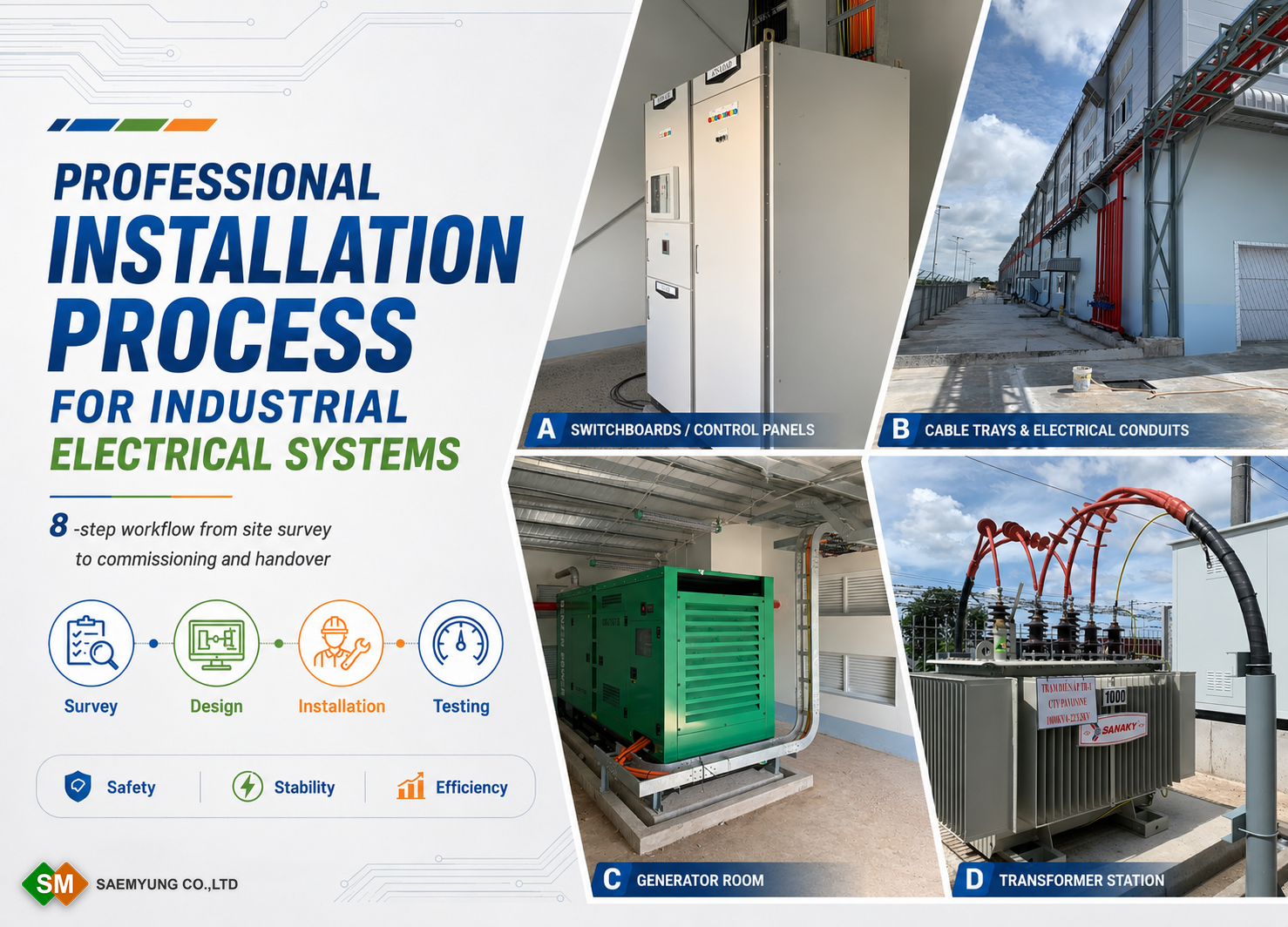
PROFESSIONAL INDUSTRIAL ELECTRICAL SYSTEM INSTALLATION PROCESS
The Importance of Industrial Electrical Systems
Industrial electrical systems are one of the most critical components of factories, manufacturing plants, and industrial facilities. A properly designed and installed electrical system ensures continuous production, operational safety, and maximum efficiency.
To achieve high quality and reliability, the installation process must follow a professional workflow, from site survey and design to commissioning and handover.
Step 1: Site Survey and Requirement Assessment
This is the first and most important stage of the project.
Our engineers will perform:
- Site condition survey
- Assessment of power consumption requirements
- Load capacity calculation
- Equipment installation location inspection
- Evaluation of actual construction conditions
The objective is to develop an optimal solution that meets current production needs while allowing future expansion.
Step 2: Electrical System Design
After completing the survey, the engineering team proceeds with system design.
Design Scope
- Electrical single-line diagrams
- Power distribution diagrams
- Electrical panel design
- Lighting system design
- Grounding system design
- Lightning protection system design
- Backup power system design
The design must ensure:
✅ Safety
✅ Energy efficiency
✅ Ease of operation
✅ Ease of maintenance
Step 3: Planning and Material Preparation
Before installation begins, the following preparations are carried out:
- Material procurement
- Equipment quality inspection
- Construction schedule preparation
- Workforce allocation
- Implementation of safety measures
Common Equipment Includes:
- Electrical panels
- MCCBs
- ACBs
- Power cables
- Cable trays
- Cable ladders
- Lighting fixtures
- Lightning protection devices
Step 4: Cable Tray and Cable Installation
This is the main on-site construction phase.
Scope of Work
- Installation of cable ladders
- Installation of cable trays
- Power cable routing
- Control cable routing
- Signal cable routing
Requirements
- Compliance with approved drawings
- Neat and professional workmanship
- Easy access for future maintenance
Step 5: Installation of Electrical Panels and Equipment
Electrical Panel Systems
- MSB (Main Switchboard)
- DB (Distribution Board)
- MCC (Motor Control Center)
- ATS (Automatic Transfer Switch)
Electrical Equipment
- Circuit breakers
- Contactors
- Variable Frequency Drives (VFDs)
- PLC systems
- Power meters
All equipment must be thoroughly inspected before wiring and commissioning.
Step 6: Grounding and Lightning Protection Installation
The grounding system helps:
- Protect personnel
- Protect equipment
- Ensure stable system operation
Installation Scope
- Ground rods
- Grounding conductors
- Direct lightning protection system
- Surge protection system
Step 7: Testing and Commissioning
After installation is completed, engineers perform comprehensive testing.
Technical Inspection
- Insulation resistance testing
- Grounding resistance testing
- Wiring inspection
- Voltage verification
Commissioning
- No-load testing
- Load testing
- Operational performance verification
All parameters must comply with design specifications before project handover.
Step 8: Inspection, Acceptance, and Handover
This is the final stage of the project.
Activities Include
- Internal inspection and acceptance
- Client inspection and acceptance
- As-built documentation handover
- Operation training
- Maintenance guidance
Benefits of a Professional Installation Process
A well-structured industrial electrical installation process provides:
✔ Enhanced workplace safety
✔ High-quality project execution
✔ Reduced operational failures
✔ Lower maintenance costs
✔ Extended equipment lifespan
✔ Improved project schedule control
Conclusion
A professional industrial electrical installation process is the foundation of a safe, efficient, and reliable production environment. By following standardized procedures and utilizing experienced engineers and qualified equipment, businesses can ensure long-term operational stability while maximizing investment efficiency.